


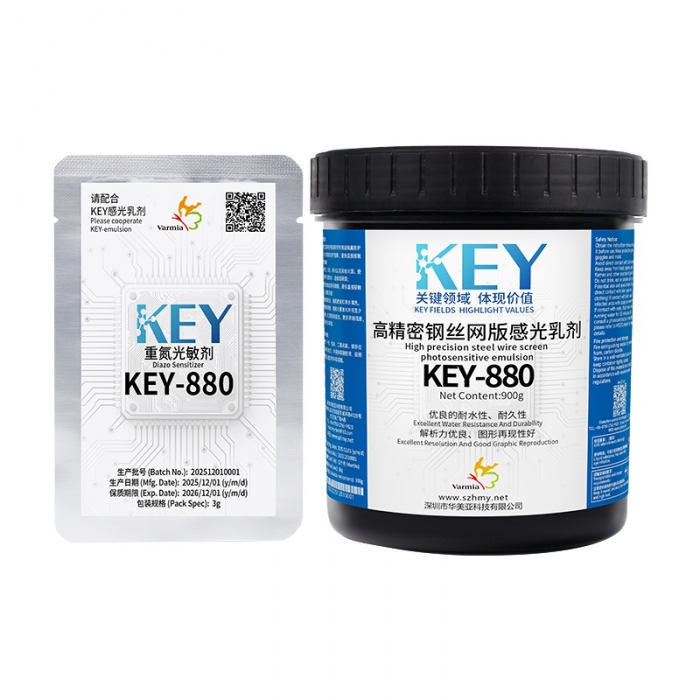
KEY-880 High-Precision Steel Screen Photo Emulsion
Performance Characteristics
| Compliant with Rohs Environmental Regulations | Excellent Resistance to Acids, Water, And Solvents | High Sensitivity, Short Exposure Time |
| High Resolution, Fine Line Definition | Suitable for Automatic Coating of Stainless Steel Screens | Highly Adhesive to Stainless Steel Mesh |
Product Application Scope
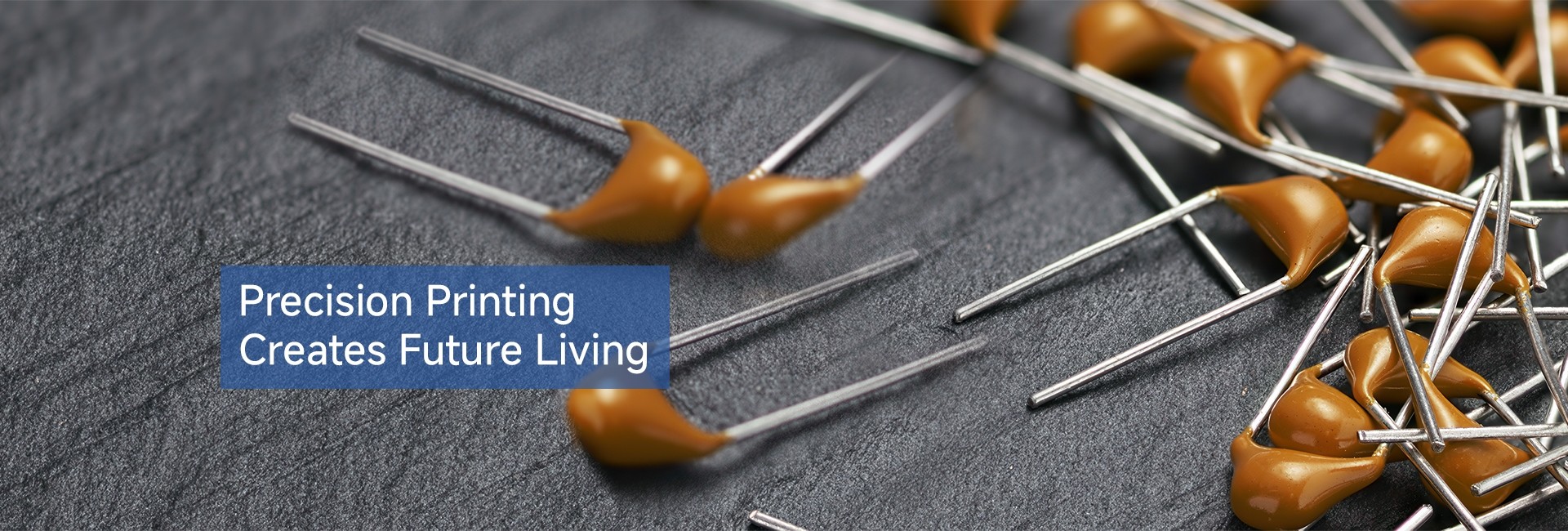
KEY-880 High-Precision Steel Mesh Screen Photoresist is a diazo-based, solvent-resistant, water-resistant photosensitive resin emulsion. It is suitable for printing conductive silver paste and sintered pastes on solar cell front/back sheets, aluminum backsheets, resistive/capacitive touchscreens, MLCCs, ceramic substrates, and electronic components. Printed patterns exhibit sharp edges, clarity, and full coverage. Specifically designed for high-precision steel mesh screens, it excels in high-precision printing. Particularly suitable for stainless steel mesh screens above 400 mesh with line/space (L/S) ratios of 30-50 µm.
Product Characteristics
| Appearance | Emulsion Weight | Packaging Specifications | Solid Content | Viscosity (mPa·s) Type B Viscosity at 25°C | Diazo |
| Blue Viscous Emulsion | 900 g | 1 kg | 33% | 8000 | K-88 |
Reference Exposure Time
| Screen Type | Angle | Thickness | Light Source | Light Spacing | Optimal Exposure Time |
| SUS 500/16 | 22.5° | 15±1µm | Ultra-High-Pressure Mercury Lamp 3 kW | 1 m | 82 seconds |
It is recommended to perform a secondary exposure after development, which can effectively improve print durability and enhance peelability.
Instructions for Use
Sensitization: Dissolve diazonium in approximately 70-100 grams of purified water. Pour the diazonium solution into the photosensitive emulsion and stir thoroughly with a glass rod or wooden stick. Allow bubbles to dissipate completely before use.
Coating: Apply using a high-quality squeegee. Coating characteristics depend on screen size and tension. Determine the number of coating passes required to achieve the desired film thickness based on printing needs. For two or more coating passes, ensure the previous screen is completely dry before proceeding. Failure to do so may cause film peeling.
Drying: Optimal drying temperature is below 40°C. Excessive heat triggers thermal reactions in the photosensitive emulsion, compromising plate-making quality. Ensure screens are thoroughly dried.
Exposure: Optimal wavelength is 300-400nm. Results are enhanced using ultra-high-pressure mercury lamps or high-pressure gallium-iodine lamps.
Development: Uniformly flush the plate surface using a high-pressure water gun or spray gun.
Drying: After development, first remove surface moisture from the screen before placing it in a drying oven below 40°C. Ensure thorough drying; otherwise, the screen may experience emulsion loss.
Secondary Exposure: Expose the S-side for 1-2 times the duration of the P-side exposure to significantly enhance print durability.
Packaging Specifications
1 kg /can (12 cans /box)
Storage and Transportation
Transport using clean trucks. Stack individual packages no higher than five layers, with the bottom layer secured using anti-slip pallets to prevent crushing, deformation, or tipping.
Ensure proper sealing, avoid direct sunlight, and keep away from high heat.
Unopened and unsensitized, the shelf life is 12 months.
Shenzhen Varmia Technology Co., Ltd.
Address: Building A, Da Wan Cultural Plaza, No. 4128
Dongcheng Huan Road, Malan Subdistrict, Pingshan District, Shenzhen
Tel: 0755-27659820
Fax: 0755-27659830
Mobile: 13302956659 (Mr. Wang)
Email: hmy-tech@163.com
Shenzhen Varmia Technology Co., Ltd. (Longgang Branch)
Address: 2nd Floor, Building 12, Anbo Technology Industrial Park,
Baolong 4th Road, Baolong Avenue, Longgang District, Shenzhen
Tel: 0755-27659820
Fax: 0755-27659830
Mobile: 13392832759 (Ms. Jin)
Email: hmy_jinjing@yeah.net
Copyright @ 2018 ShenZehn Varmia Technology Co.,Ltd Te:0755-27659820 Fax:0755-27659830
Address: Building A, Dawan Culture Plaza, No. 4128 Dongcheng Ring Road, Mawei Street, Pingshan District, Shenzhen Mailbox:hmy-tech@163.com